


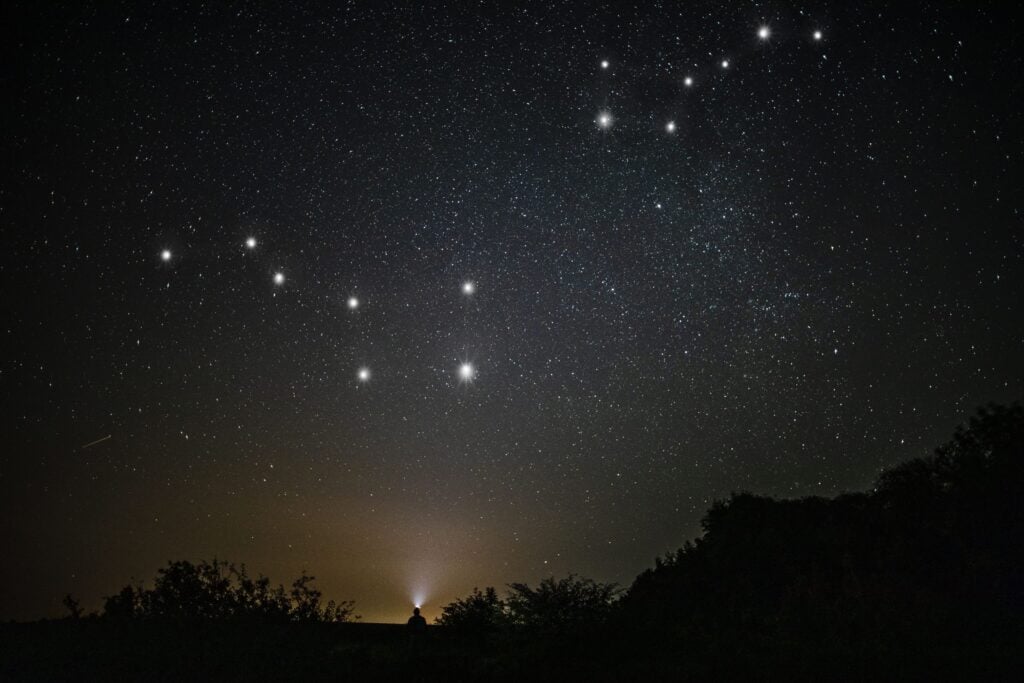
You’re never at a loss for things to do in Kruger Park. The park offers exceptional stargazing opportunities due to minimal light pollution across its 19,485 square kilometres in Mpumalanga and Limpopo provinces. The park’s dark skies reveal the Southern Hemisphere’s brightest constellations, including the Southern Cross and Magellanic Clouds, making it one of South Africa’s premier astronomical destinations alongside traditional wildlife viewing.
Best things to do in Kruger Park: Stargazing adventures
Beyond the legendary Big Five sightings, Kruger National Park transforms into a celestial theatre after sunset. This UNESCO World Heritage Site spans two South African provinces and offers visitors an extraordinary opportunity to witness some of the world’s darkest skies.
Why Kruger Park offers world-class stargazing
The vastness of Kruger National Park creates natural barriers against light pollution that plague urban areas. Stretching across nearly 2 million hectares of pristine wilderness, the park provides optimal conditions for astronomical observation.
Dark Sky Classification
Kruger’s remote location in northeastern South Africa means minimal artificial light interference. The Bortle Dark-Sky Scale, which measures light pollution levels, rates most areas within Kruger between Class 2-3 (excellent to good dark skies).
Key advantages include:
- Zero urban light pollution within park boundaries
- High altitude areas reaching over 800 metres above sea level
- Dry climate conditions reducing atmospheric moisture
- 360-degree unobstructed horizon views in many locations
Best Kruger Park activities for night sky enthusiasts
Night game drives with stargazing components
Traditional night safaris combine wildlife spotting with celestial observation. Guests can enjoy quieter celestial moments between animal encounters.
- Timing: Departures normally begin 90 minutes before sunset
- Duration: 3-4 hours
- Wildlife: Nocturnal species like leopards, lions, hyenas, and smaller mammals
Southern hemisphere celestial highlights in Kruger
Majestic Southern constellations
The Southern Cross serves as the most recognisable constellation visible from Kruger National Park. This distinctive formation points toward the South Celestial Pole and remains visible year-round from South African latitudes.
Other notable formations include:
- Centaurus: Contains Alpha Centauri, the closest star system to Earth
- Crux: The smallest of the 88 modern constellations
- Carina: Features Canopus, the second-brightest star in the night sky
- Scorpius: Prominent during winter months with bright Antares
Magellanic clouds viewing
The Large and Small Magellanic Clouds appear as misty patches to the naked eye. These satellite galaxies of the Milky Way are invisible from Northern Hemisphere locations, making them special attractions for international visitors.
- Best viewing months: April through September
- Optimal viewing time: 2-4 hours after sunset
- Location: Southeastern horizon during peak visibility
Seasonal stargazing opportunities
Autumn and Winter excellence (March – August)
Cooler temperatures and reduced atmospheric turbulence create ideal viewing conditions. The dry winter season minimises cloud cover while comfortable temperatures allow extended outdoor observation.
Season | Temperature range | Sky clarity | Best constellations |
Autumn (Mar-May) | 18-25°C | Excellent | Southern Cross, Centaurus |
Winter (Jun-Aug) | 12-22°C | Outstanding | Orion, Scorpius, Magellanic Clouds |
Spring (Sep-Nov) | 20-28°C | Very Good | Cygnus, Aquila |
Summer (Dec-Feb) | 22-30°C | Decent | Southern Triangle, Phoenix |
Year-round celestial events
Kruger’s location provides consistent access to astronomical phenomena regardless of season. Meteor showers, planetary alignments, and lunar events occur throughout the year.
Notable annual events:
- Eta Aquariids Meteor Shower (May): Peak rates of 30-60 meteors per hour
- Perseids (August): Visible from Kruger despite Southern Hemisphere location
- Geminids (December): Often the year’s most prolific meteor shower
- Total Lunar Eclipses: Fully visible from South African latitudes
Best locations within Kruger for stargazing
Open savannas and clearings
Wide grassland areas provide unobstructed 360-degree views essential for comprehensive sky observation. Popular locations include the plains near Satara Rest Camp and areas around Skukuza.
Elevated viewpoints
Higher altitude locations offer superior atmospheric conditions and extended horizons. The rocky outcrops near Pretoriuskop and hills around Berg-en-Dal provide excellent vantage points.
Riverside locations
Areas along the Sabie, Crocodile, and Luvuvhu rivers combine stargazing opportunities with potential wildlife encounters at watering points.
Stargazing from Kruger Gate Hotel
The Kruger Gate Hotel’s unique position adjacent to the Paul Kruger Gate entrance provides guests with exceptional stargazing access. The hotel’s elevated viewing deck and infinity pool area offer unobstructed views of the night sky while maintaining the comfort and luxury of premium accommodation.
Get a feel for our night skies by watching this stunning time-lapse captured right here at Kruger Gate Hotel.
Premium amenities for night sky enthusiasts
- Viewing deck: Purpose-built observation area overlooking the Sabie River
- Infinity pool: Relaxed stargazing while enjoying resort amenities
- Sprawling gardens: Serene outdoor lounging areas for unobstructed sky views
- River boma: Rustic, riverside venue for sensational, private starlit dining
- Lapa Restaurant: Open-air fireside dining beneath a vast Kruger night sky
Guests can seamlessly transition from afternoon game drives to evening stargazing sessions without leaving the property. The hotel’s riverside location provides the perfect balance of accessibility and pristine dark sky conditions.
Photography and equipment tips
Essential Gear Recommendations
- Camera Settings: Manual mode with 15-30 second exposures
- Tripod: Sturdy support essential for sharp star trail images
- Red Flashlight: Preserves night vision during equipment adjustments
- Warm Clothing: Even summer nights can become cool during extended sessions
Discover more photography tips by reading our outdoor photography guide.
Smartphone astrophotography
Modern smartphones offer surprisingly capable night sky photography with proper technique:
- Use Night Mode: Most recent phones include dedicated astronomical settings
- Find Stable Support: Lean against trees or use improvised tripods
- Focus on Bright Objects: Moon and planet shots often work better than deep sky
- Bracket Exposures: Take multiple shots at different settings
Visit our safari photography guide for more expert advice on smartphone wildlife shots.
Kruger National Park’s astronomical significance
Kruger National Park’s commitment to preserving dark skies aligns with global conservation efforts. The International Dark-Sky Association recognises the importance of protecting natural nighttime environments for both wildlife and human heritage.
Recent studies indicate that light pollution affects wildlife behaviour patterns, making Kruger’s natural darkness essential for ecological balance. Nocturnal species rely on natural light cycles for hunting, navigation, and reproduction.
The park’s location at approximately 24°S latitude provides unique astronomical advantages. Unlike Northern Hemisphere destinations, Kruger offers access to the Galactic Centre during winter months when viewing conditions are optimal.
Research conducted by South African universities utilises Kruger’s pristine conditions for ongoing astronomical studies. The park’s contribution to citizen science projects helps monitor light pollution trends and supports international dark sky preservation efforts.
Frequently asked questions
What makes Kruger Park ideal for stargazing?
Kruger National Park offers minimal light pollution across 19,485 square kilometres of wilderness, creating Bortle Class 2-3 dark sky conditions ideal for astronomical observation. The park’s remote location in northeastern South Africa, combined with high altitude areas and dry climate conditions, provides optimal stargazing opportunities year-round.
When is the best time for stargazing in Kruger National Park?
Winter months (May through August) offer the best stargazing conditions due to clear, dry skies and comfortable temperatures ranging from 12-22°C. However, Kruger’s dark skies provide excellent astronomical viewing opportunities throughout the year, with each season offering different celestial highlights.
Can you see the Southern Cross from Kruger Park?
Yes, the Southern Cross constellation is clearly visible from Kruger National Park throughout the year. This iconic Southern Hemisphere constellation appears prominently in Kruger’s dark skies and serves as an excellent starting point for constellation identification during stargazing activities.
Are telescopes available for stargazing activities in Kruger?
Many accommodation facilities and tour operators provide telescopes and binoculars for stargazing activities. Carrying portable equipment during night safaris can be beneficial for use during evening programmes. Kruger Gate Hotel offers binoculars for rent.
What Southern Hemisphere constellations are visible from Kruger?
Kruger’s location provides access to iconic Southern Hemisphere constellations including the Southern Cross, Centaurus, Carina, and Scorpius. The Large and Small Magellanic Clouds are also visible as satellite galaxies, offering unique viewing opportunities unavailable from Northern Hemisphere locations.
Can you combine stargazing with wildlife viewing in Kruger?
Night game drives often incorporate stargazing segments during quieter periods between animal encounters. Many operators offer combined experiences that include both nocturnal wildlife spotting and astronomical observation, maximising the unique opportunities available in Kruger’s dark sky environment.
Is stargazing possible year-round in Kruger National Park?
Kruger National Park offers excellent stargazing opportunities throughout the year, with seasonal variations in constellation visibility and weather conditions. While winter months provide optimal viewing conditions, each season offers unique celestial events including meteor showers, planetary alignments, and different constellation patterns.
Conclusion
Kruger National Park’s exceptional stargazing opportunities complement its world-renowned wildlife experiences, creating unforgettable memories under some of Africa’s darkest skies. The combination of minimal light pollution, diverse celestial phenomena, and comfortable viewing conditions makes Kruger an ideal destination for astronomy enthusiasts.
Experience the magic of Kruger’s night skies from the luxury and comfort of Kruger Gate Hotel, where professional stargazing guidance meets exceptional accommodation just minutes from the Kruger Park entrance.