


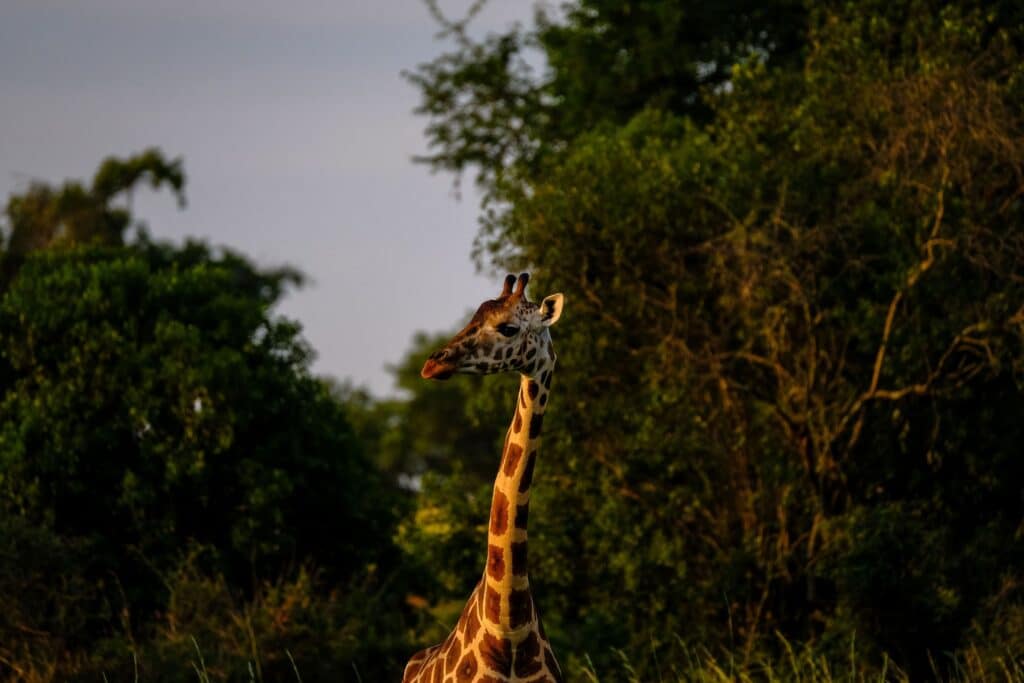
Torn between a half-day and full-day safari at Kruger National Park? Half-day drives run 3–4 hours and costs start around R1,365 per person*, a great fit if you’re short on time or travelling with little ones. Full-day safaris go for 8–10 hours starting at roughly R1,910 per person*, giving you the best shot at Big Five sightings and a much deeper taste of the bush. Whichever you choose (full vs. half-day safari), South Africa’s most iconic wildlife destination delivers the goods. Visit Kruger Gate Hotel’s complete safari pricelist for more information.
Choosing between a full vs. half-day safari experience
Picture this: you’re sitting in an open vehicle as the African sun creeps over the horizon, a herd of elephants moving silently through the mist just metres away. Whether that moment lasts three hours or ten is entirely up to you, and it’s one of the most enjoyable decisions you’ll make when planning a trip to Kruger National Park.
Choosing between a full or half-day game drive isn’t just a matter of budget or schedule. It shapes the whole texture of your experience: how deep into the bush you venture, how many habitats you move through, and whether you’re back at the lodge for a late breakfast or watching the sunset from the vehicle with a cold drink in hand. There’s no wrong answer, but the best time for safari in Kruger South Africa depends on your particular group, and this guide will help you find it.
Understanding half-day safari experiences in Kruger
Duration and timing options
Half-day safaris typically span 3–4 hours, with morning drives departing around 5:00–5:30 AM and afternoon sessions starting between 1:00–2:00 PM. These timeframes are timed to catch peak animal activity, when wildlife is most on the move (hunting, feeding, and heading to water).
Morning half-day safaris wrap up around 11:30 AM–12:00 PM, leaving you free to head back for a leisurely lunch. Afternoon drives run through to sunset at around 5:30–6:00 PM, offering gorgeous golden-hour light for photos and the chance to spot nocturnal species beginning to stir.
Wildlife viewing potential
Rather than trying to cover the whole park, half-day drives focus on specific areas near the park gates, and that concentrated approach can be surprisingly effective. Waterholes and wildlife corridors near the Paul Kruger Gate entrance are particularly productive, and experienced guides know exactly where to position you for the best sightings within the time available.
These shorter drives are also ideal if you’re hoping to target specific experiences, morning predator activity, for instance, or afternoon elephant gatherings.
Ideal candidates for half-day safaris
Families travelling with young children tend to get the most out of half-day safaris. Shorter time in the vehicle means less fatigue, happier kids, and more smiles all round, and there’s still plenty of wildlife action to go around.
A half-day is also a smart way to ease in if it’s your first time on safari. You get a genuine taste of the bush before deciding whether you want to go deeper. And for anyone with a packed South African itinerary, slotting a half-day drive into your schedule is far more manageable than blocking out a full day.
Exploring full-day Kruger safari adventures
Extended duration benefits
With 8–10 hours in the park, a full-day safari is a completely different kind of experience. You have time to move between ecosystems, from the riverine forests along the Sabie River to wide open grasslands and dense bushveld, and to push further into remote areas where wildlife diversity really shines.
The longer day also means you’re out during both the morning and afternoon activity windows, with a relaxed mid-day break in between that mirrors the natural rhythm of the bush.
Enhanced wildlife encounter probability
More time simply means more chances. You can revisit promising locations, track animal movements as they unfold, and wait out a sighting rather than having to move on with a full day on your side. That patience is often what turns a distant leopard in a tree into a full predator encounter.
The range of habitats you’ll cover also adds up quickly: riverine areas draw hippos and crocodiles, woodland zones are preferred by leopards and several antelope species, and open areas give you the long sightlines that make spotting rhino so rewarding.
Premium experience elements
Full-day safaris normally include a bush lunch served somewhere scenic inside the park, one of those simple, memorable moments that tends to stick with you long after the trip is over. Many operators also build in photography guidance and richer ecological storytelling from your guide, turning sightings into real learning experiences.
The unhurried pace is perhaps the biggest luxury of all. Rather than glimpsing behaviour and moving on, you have time to sit with it, watch it develop, and really understand what you’re seeing.
Safari Duration Comparison Table
Factor | Half-Day Safari | Full-Day Safari |
Duration | 3–4 hours | 8–10 hours |
Cost Range* | R1,000–6,000 pp | R2,000–7,000 pp |
Wildlife Probability | Moderate to High | Very High |
Physical Demand | Low | Moderate |
Best for Families | Yes (young children) | Yes (older children) |
Photography Time | Limited | Extensive |
Ecosystem Coverage | 1–2 areas | 4–5 areas |
Meal Inclusion | Snacks only | Stop for bush lunch |
*Price ranges valid until 31 October 2026
Factors influencing your safari choice
Budget considerations
Half-day safaris offer real value (usually 40–50% less than the full-day equivalent) while still delivering a genuinely rewarding wildlife experience. If you’re staying for several nights, doing a couple of half-day drives can actually give you more variety than a single full day, and at a comparable price.
Full-day safaris are a bigger investment, but the return is proportional: more hours in the park, more habitats covered and higher encounter probability. For serious wildlife enthusiasts, it’s usually worth every rand.
Physical comfort and stamina
A full day in a safari vehicle is a comfortable experience, but it does ask something of you, especially in summer, when Kruger temperatures can climb to 35–40°C. Staying hydrated, applying sun protection generously, and wearing light, breathable layers makes a huge difference.
Half-day drives sidestep most of that. You’re back indoors before the real heat of the day sets in, which suits guests who prefer a gentler pace or who find extended outdoor exposure challenging.
Group dynamics and age considerations
Mixed-age groups (with elderly grandparents or toddlers in tow) can find half-day safaris easier to manage. Shorter time in the vehicle keeps everyone comfortable and engaged, without anyone feeling stretched.
Adult-only groups, on the other hand, typically lean toward full-day adventures. Without age-related constraints, you can simply focus on squeezing every last moment out of your time in the park.
Seasonal considerations for Kruger safaris
Year-round wildlife viewing
One of the great things about Kruger is that there’s no bad time to visit. Each season brings something different, and the park’s diverse ecosystems support resident wildlife all year round.
The dry season (May–September) concentrates game around permanent water sources, making sightings more predictable and the sparse vegetation improving visibility considerably. Comfortable temperatures also make full-day drives particularly enjoyable during these months.
The wet season (October–April) transforms the park into something lush and green, with newborn animals arriving and spectacular bird migrations getting underway. The denser bush can make spotting trickier, which is part of why full-day drives tend to reward the extra patience they allow.
Weather impact on safari duration choice
Winter mornings (June–August) in Kruger can be chilly, sometimes as low as 5–10°C at dawn, so layering up for early half-day departures is essential. Temperatures climb quickly through the morning, though, making full-day drives very pleasant once the day warms up.
In summer, morning half-day drives are a smart way to enjoy peak wildlife activity while enjoying moderate afternoon temperatures. Afternoon half-day drives flip that equation nicely: cooler air, active wildlife, and a sunset to close things out.
Making your decision: Full or half-day game drive
Decision checklist
Choose a half-day safari if you:
- Are travelling with children under 8 years old
- Have a tighter safari budget
- Prefer moderate activity levels
- Want to combine game viewing with other activities during your stay
- Are heading into the bush for the first time
Choose a full-day safari if you:
- Want to maximise your wildlife viewing time
- Love being fully immersed in nature
- Have the budget for a premium experience
- Are travelling with older children or adults
- Are serious about wildlife photography
Combining both experiences
Many guests who stay at Kruger Gate Hotel, near the Paul Kruger Gate entrance, end up doing both, a full-day drive on one day, a morning half-day on another. It’s a genuinely satisfying approach that mixes deep immersion with more relaxed outings, and gives you a broader experience of what the park has to offer.
Fun facts: African safaris and their global popularity
Safaris have captured the imagination of travellers for generations, and the numbers back it up. Here are some fascinating facts about one of the world’s most beloved travel experiences:
- The word “safari” comes from the Arabic and Swahili word meaning simply “journey,” a fitting reminder that at its heart, a game drive is about the adventure of going somewhere wild and seeing what you find.
- Kruger National Park alone welcomes well over 1.5 million visitors every year, making it one of the most visited wildlife reserves on the planet. It’s also one of the oldest, having been established in 1898, which means it’s been welcoming guests for well over a century.
- Africa as a whole is consistently ranked among the top travel destinations globally, with wildlife tourism contributing billions of dollars to the continent’s economies each year. South Africa, Tanzania, Kenya, Botswana, and Zimbabwe are among the most popular safari destinations, each offering a distinct flavour of the experience.
- Kruger’s wildlife numbers are staggering: the park is home to approximately 12,000 elephants, making it one of the largest elephant populations anywhere in Africa. It also supports over 500 bird species and 147 mammal species, more biodiversity than most countries can claim across their entire territory.
- The Big Five (lion, leopard, elephant, rhino, and buffalo) weren’t originally named for their impressiveness, but for how dangerous they were considered to be on foot. Today, the term has become synonymous with the ultimate safari checklist, and Kruger remains one of the best places on earth to tick all five.
Maximising your Kruger safari experience
Expert guide selection
Kruger Gate Hotel’s in-house safari guides bring years of park experience and a genuine passion for wildlife to every game drive, and that makes all the difference. The best safaris aren’t just about being in the right place; they’re about having someone alongside you who truly understands what they’re seeing. Game drives are available to all hotel guests and can be booked up to 48 hours in advance.
Strategic accommodation positioning
Our flexible accommodation options make it easy to build the safari trip that suits you, whether you’re planning a quick getaway or an extended stay. Rooms and suites are designed with genuine comfort in mind; think quality linens, beautiful finishes, and spaces that feel like a proper retreat after a full day in the wild. It’s the kind of place that’s hard to leave, which is exactly the point.
Frequently asked questions about full vs. half-day safari encounters
What time do half-day safaris typically start in Kruger National Park?
Morning half-day safaris depart between 5:00–5:30 AM to catch peak wildlife activity. Afternoon drives start around 1:00–2:00 PM and run through to sunset.
How much does a full-day safari cost compared to a half-day experience?
Full-day safaris typically cost R2,000–7,000 per person; half-day options range from R1,000–6,000. Prices vary by operator and season.
Can young children participate in full-day safaris in Kruger?
They can, but half-day experiences are generally the better fit for children under 8, given the heat, sitting time, and attention span involved.
What wildlife viewing differences exist between half-day and full-day safaris?
Full-day safaris offer significantly higher encounter probability: more time, more ecosystems, and the ability to follow animal movements throughout the day. Half-day drives focus on peak activity windows and specific high-yield areas.
Which safari duration provides better photography opportunities?
Full-day safaris win here. You get two golden-hour periods, a wider variety of lighting conditions, multiple habitats, and the unhurried time to wait for the shot you want.
Are full-day safaris worth the additional cost over half-day experiences?
Almost always yes for serious wildlife enthusiasts. You get three to four times more time in the park and higher encounter probability. The premium is real, but so is the return.
What should I bring differently for full-day versus half-day safaris?
Pack extra water, additional sun protection, a light layer for the morning chill, and spare camera batteries for full-day drives. Half-day drives are more forgiving, basic sun protection and a water bottle will see you through.
Conclusion
A safari in Kruger National Park is one of those experiences that tends to exceed expectations every single time, whether you choose three hours or ten. Half-day drives are perfect for families with young children, first-timers finding their feet, and anyone juggling a busy itinerary. Full-day adventures are for those who want to go deep: more distance, more diversity, more wildlife, and more of that irreplaceable feeling of being properly in the wild.
Both options shine when you’re guided by someone who genuinely knows the park, and when your accommodation puts you right at the gate rather than an hour away from the action. That combination, expert guidance and perfect positioning, is what turns a good safari into a great one.
Plan your ideal Kruger experience today by exploring Kruger Gate Hotel’s guided safari packages and discover how our location directly next to the Paul Kruger Gate entrance gives you more time in the park and less time on the road.