


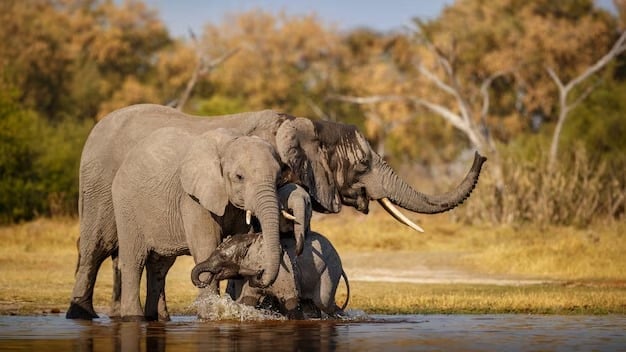
The southern region of Kruger National Park is widely regarded as the best area for first-time visitors, offering the highest density of wildlife and well-maintained infrastructure. The central region suits experienced safari-goers seeking open savanna landscapes, while the remote north rewards those craving true wilderness. The “best” section ultimately depends on your travel style, expectations, and accommodation base.
Understanding Kruger’s regions: A quick overview
Kruger National Park spans nearly two million hectares across South Africa’s Limpopo and Mpumalanga provinces — one of Africa’s largest and most celebrated conservation areas.
The park is broadly divided into three regions: south, central, and north. Each offers a distinct ecosystem, terrain, and wildlife density. Knowing the difference helps you choose where to base yourself and what to expect.
No wildlife sighting is ever guaranteed in a national park — animals move freely across vast terrain. What each region does offer is a different kind of encounter with the African bush.
The southern region: High wildlife density and accessibility
The south is the most visited part of Kruger, and for good reason. The landscape here is dominated by dense bushveld — knobthorn and marula trees, rocky outcrops, and riverine forest along the Sabie and Crocodile rivers.
This combination of vegetation types supports an exceptionally diverse range of animals. The Big 5 — lion, leopard, elephant, rhino, and buffalo — are all present in the south, though sightings depend entirely on conditions, animal movement, and timing.
Why the south appeals to most visitors
- Easiest access from Johannesburg and the Mpumalanga Lowveld
- Well-maintained roads, including a mix of tar and gravel routes
- Higher animal concentrations relative to other regions (Source: South African National Parks, 2023)
- Proximity to private concessions along the park’s western boundary
- Established infrastructure with rest camps, picnic spots, and fuel stations
For travellers staying at Deluxe Rooms & Suites at Kruger Gate Hotel, the southern and central boundary near the Paul Kruger Gate is the natural starting point. The hotel sits directly at the gate, making it one of the most strategically positioned luxury properties in the region.
The central region: Open savanna and diverse landscapes
The central Kruger stretches from Satara in the east to the Olifants River in the north. This is classic open savanna — flat thornveld plains that offer long sightlines and excellent game-viewing conditions.
Satara is considered one of the best lion territories in all of Kruger. The open grasslands attract large herds of zebra, wildebeest, and impala, which in turn draw predators. Buffalo are common, and elephant sightings along the Olifants River are frequent.
Central Kruger at a glance
- Terrain: Flat, open savanna with scattered acacia and mopane woodland
- Predator activity: High — particularly lion and cheetah
- Birdlife: Exceptional, especially around the Olifants River
- Visitor volume: Moderate — less crowded than the south
- Road network: Good, with a mix of tar and game-viewing loops
The central region suits travellers who have already experienced the south and want wider open landscapes and a slightly quieter atmosphere.
The northern region: Remote wilderness and rare species
The far north of Kruger — beyond Mopani and Shingwedzi — is a different world entirely. Mopane scrub dominates, the landscape feels ancient, and the silence is profound.
This region is best suited to experienced bush travellers who understand that wildlife density is lower but the quality of encounter is often more intimate. Rare species such as Lichtenstein’s hartebeest, Sharpe’s grysbok, and the elusive nyala are more commonly spotted here than in the south.
The north also holds Kruger’s largest elephant herds, which migrate through the mopane woodland following seasonal water sources.
Who should visit the north?
- Repeat visitors who have explored the south and central regions
- Travellers seeking solitude and minimal crowds
- Birders — the north hosts several species not found further south
- Those with at least four to five days to explore at a slower pace
Side-by-side comparison: Which region suits you?
|
Feature |
South |
Central |
North |
|
Wildlife density |
High |
Moderate–High |
Lower |
|
Big 5 sightings |
Most likely |
Good |
Possible |
|
Crowds |
Highest |
Moderate |
Lowest |
|
Road quality |
Excellent |
Good |
Variable |
|
Accessibility |
Easy |
Moderate |
Longest drive |
|
Rare species |
Moderate |
Moderate |
Best |
|
Scenery variety |
High |
High |
Distinctive |
|
Best for |
First-timers |
All levels |
Experienced |
How to choose the best part of Kruger for your trip
Step-by-step guide to selecting your Kruger region
Step 1: Define your primary goal
Are you chasing Big 5 sightings, rare birds, wide-open landscapes, or total solitude? Your answer immediately narrows the field.
Step 2: Consider your travel time
The south is accessible within a few hours from Johannesburg. The north requires a full day’s drive or a connecting flight to Phalaborwa or Hoedspruit.
Step 3: Assess your experience level
First-time safari visitors consistently report the highest satisfaction in the southern region, where infrastructure and wildlife density align most reliably (Source: South African Tourism, 2022).
Step 4: Choose your accommodation base
Your lodge or hotel position within the park determines which areas you can realistically explore each day. Staying at Kruger Gate Hotel places you at the Paul Kruger Gate — the primary entrance to the southern section — with immediate access to some of the park’s most productive game-viewing routes.
Step 5: Plan for flexibility
No matter which region you choose, build flexibility into your itinerary. Animals move. Conditions change. The best game-viewing often happens when you least expect it.
Dining and recovery after a day in the bush
After hours on game-viewing roads, returning to exceptional food and comfort matters. Kruger Gate Hotel’s Kudyela Restaurant and Lapa Restaurant offers a curated dining experience that reflects the flavours and heritage of the African bush — the ideal way to close a day in the wild.
For those who want to decompress more deeply, the African Spa provides treatments designed to restore and ground you after the sensory richness of a day in Kruger. The spa is situated within the hotel grounds — not in the treetops — and draws on African botanical traditions.
Corporate groups and extended stays
Kruger Gate Hotel also caters to corporate groups seeking to combine professional objectives with the extraordinary backdrop of the Lowveld. The corporate and private functions offering includes dedicated conference facilities with full event support — ideal for leadership retreats, incentive travel, and strategic off-sites.
The southern Kruger region, with its reliable infrastructure and proximity to Hoedspruit and Nelspruit airports, makes it the most practical base for groups travelling from South Africa’s major business centres.
The verdict: Which part of Kruger is best?
For most travellers — particularly those visiting for the first time — the southern region offers the most rewarding combination of wildlife, accessibility, and luxury accommodation options.
The central region is the right choice for those seeking open plains and predator activity with fewer crowds. The north is for the true wilderness seeker who values rarity and solitude over convenience.
Kruger is a year-round destination. Each season brings different conditions — dry months concentrate animals around water sources, while the green season brings lush landscapes and newborn wildlife. There is no single “best time” to visit; there is only the time that suits your schedule.
Ready to experience the southern Kruger? Explore game drives and wildlife experiences or view our luxury accommodation options to begin planning your stay at Kruger Gate Hotel — positioned directly at the Paul Kruger Gate.
Frequently Asked Questions
Which part of Kruger National Park has the most wildlife?
The southern region consistently supports the highest wildlife density, particularly around the Sabie and Crocodile rivers. The open savanna of the central region is also excellent for predator activity, especially lions.
Is the northern part of Kruger worth visiting?
Yes — for experienced travellers and birders. The north offers rare species, vast solitude, and Kruger’s largest elephant herds. It requires more time and a longer drive from major entry points.
Can wildlife sightings be guaranteed in any part of Kruger?
No. Animals move freely across the park and sightings are never guaranteed in any region. Each visit is unique, and that unpredictability is part of what makes Kruger exceptional.
Where is Kruger Gate Hotel located within the park?
Kruger Gate Hotel is situated directly outside the Paul Kruger Gate park on the western boundary of the southern Kruger National Park, near Skukuza — the park’s main rest camp and operational hub.
Is Kruger National Park worth visiting year-round?
Absolutely. Kruger offers rewarding experiences in every season. Dry months (May–October) concentrate animals near water, while the wet season (November–April) brings lush scenery, birdlife, and newborn animals. There is no single best or worst season.