


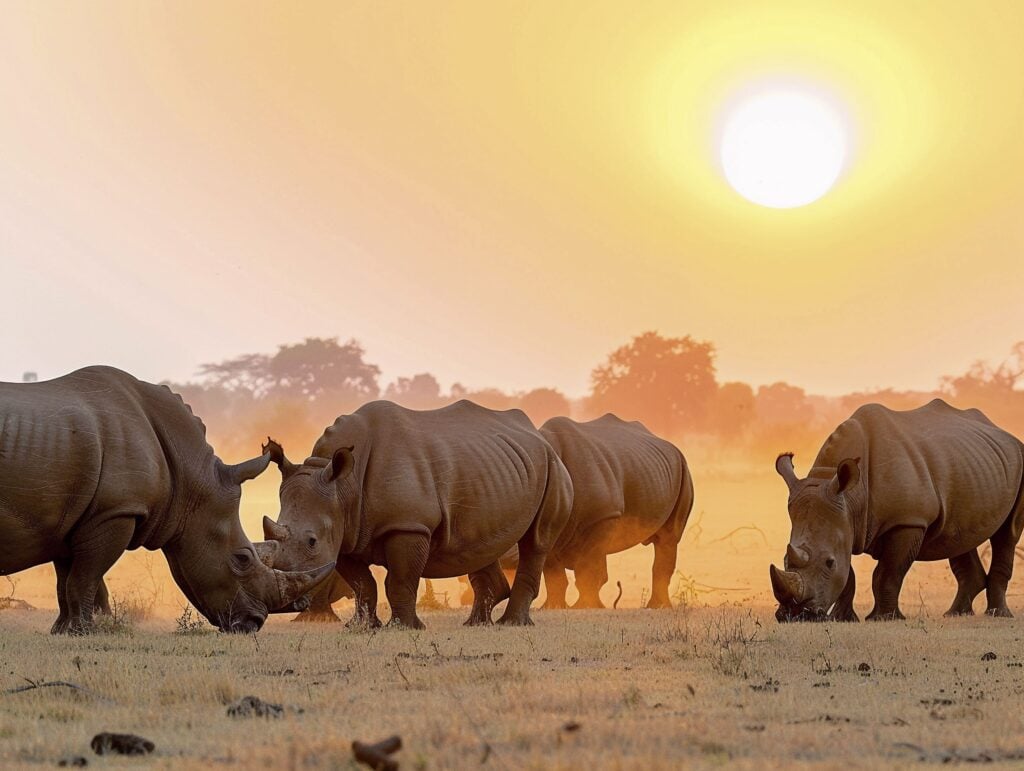
A Kruger safari delivers far more than lion, leopard, elephant, rhino, and buffalo sightings. The park’s extraordinary biodiversity — from wild dogs and cheetahs to hundreds of bird species and rare reptiles — creates moments that stay with visitors long after they leave. Staying at a luxury base like Kruger Gate Hotel places you at the heart of this wilderness, year-round.
Why the Big 5 is only the beginning
The Big 5 is a compelling drawcard, and rightly so. But experienced safari-goers will tell you that some of their most treasured memories involve animals that never appear on that famous list.
Kruger National Park spans nearly two million hectares of diverse bushveld, riverine forest, and open savanna. That scale supports one of Africa’s most complete ecosystems — one where the unexpected is always possible.
The predators you might overlook
African Wild Dog
Few sightings in the African bush generate the same raw excitement as a wild dog pack on the move. Listed as Endangered by the IUCN Red List, African wild dogs are among the continent’s rarest large carnivores — and Kruger holds one of the largest remaining populations.
Their hunts are cooperative, fast, and extraordinary to witness. Packs can cover vast distances, which means sightings are never guaranteed, but the anticipation alone sharpens every game drive.
Cheetah
The cheetah is built for speed, not stealth — which makes spotting one on open grassland a genuinely heart-stopping experience. Kruger’s southern and central regions offer the best habitat for these cats. Unlike leopards, cheetahs are largely diurnal, making daytime game drives the prime window.
Spotted Hyena
Often dismissed as scavengers, spotted hyenas are in fact highly intelligent apex predators. Hyenas live in complex clan structures, and observing their social dynamics — vocalising, play-fighting, or raising cubs near a den — offers a safari experience that rivals any Big 5 encounter.
Birds: A world within a world
Kruger National Park is home to over 500 recorded bird species. For many visitors, the birdlife becomes an obsession within days.
Species that stop conversations
- Lappet-faced vulture — Africa’s largest vulture, with a wingspan exceeding 2.8 metres
- Southern ground hornbill — a slow-moving, charismatic bird listed as Vulnerable
- Lilac-breasted roller — arguably the most photographed bird in southern Africa
- Martial eagle — powerful enough to take small antelope; rare and impressive in flight
- Saddle-billed stork — tall, striking, and a favourite along Kruger’s river systems
Birding is rewarding across every season. Kruger’s avifauna shifts with resident and migratory species throughout the year, making any month a productive time to visit.
Reptiles, amphibians, and the smaller drama
Nile Crocodile and Hippo
Kruger’s rivers — the Sabie, Olifants, and Luvuvhu — are home to substantial Nile crocodile and hippo populations. Watching a hippo pod from the riverbank at sunset is one of the park’s quieter but deeply atmospheric experiences.
Hippos are responsible for more human fatalities in Africa than almost any other large mammal, which adds a respectful edge to every waterside observation.
African Rock Python and Monitor Lizard
Both species are common in Kruger but rarely noticed by those scanning only for large mammals. A Nile monitor basking on a riverbank or an African rock python crossing a road stops vehicles and cameras alike.
The Antelope Cast: Supporting roles that steal the scene
Kruger supports 21 antelope species. Most visitors recognise impala and kudu, but the park’s rarer ungulates are worth seeking out.
Antelope Species | Notable Feature | Rarity in Kruger |
Sable antelope | Curved horns, striking black coat | Uncommon |
Roan antelope | Large, horse-like build | Rare |
Tsessebe | Fastest antelope in Africa | Uncommon |
Eland | Africa’s largest antelope | Moderate |
Nyala | Striking sexual dimorphism | Localised (north) |
Spotting a sable or roan antelope is considered a genuine prize among regular Kruger visitors — the kind of sighting that prompts a quiet celebration back at the lodge.
How to maximise wildlife encounters: A practical guide
Sightings are never guaranteed, but approach and preparation make a measurable difference.
Step 1: Go early and stay late
The hours around sunrise and sunset are peak activity periods for most species. Plan game drives to be in the field during these windows.
Step 2: Focus on water sources
Rivers, dams, and waterholes concentrate wildlife, especially during dry months. Position yourself quietly and wait — patience is consistently rewarded.
Step 3: Slow down and scan all layers
Many visitors scan at eye level for large animals. Birds, reptiles, and smaller predators require looking up into trees, down at the road surface, and into dense vegetation.
Step 4: Keep noise low and movement minimal
Animals habituate to stationary vehicles but react to sudden movement and raised voices. Stillness extends sighting time significantly.
Step 5: Note animal behaviour, not just presence
A herd of impala staring in one direction, or oxpeckers rising suddenly from a buffalo, often signals a predator nearby. Reading the bush is a skill that develops over multiple visits.
Step 6: Use a quality field guide
Investing in a southern African wildlife field guide transforms unfamiliar species from background detail into named individuals with fascinating biology.
Kruger as a year-round destination
One of the most persistent myths about safari travel is that there is a single “best” season. Kruger National Park offers distinct and rewarding experiences across all twelve months.
The dry winter months (May–September) thin out vegetation, concentrating animals around water and making sightings more frequent. The wet summer months (October–April) bring lush green landscapes, newborn animals, and spectacular birdlife as migratory species arrive.
Every month has its character. Every visit reveals something different.
Your base at the edge of the wild
Kruger Gate Hotel sits at the Paul Kruger Gate — one of the park’s main entry points — placing guests within minutes of the wilderness without sacrificing comfort or refinement.
After a morning game drive, guests return to Deluxe Rooms & Suites that balance African heritage with contemporary luxury. Evenings unfold at Kudyela Restaurant and River Boma, where the sounds of the bush accompany a carefully curated menu.
For those seeking recovery and stillness between drives, the African Spa offers treatments inspired by African botanical traditions — a fitting counterpoint to hours spent in the field.
Corporate groups and private parties can also explore tailored conference and event packages that combine the focus of a professional retreat with the singular backdrop of the Kruger ecosystem.
A safari is a conversation with the wild
The Big 5 framework was coined by big-game hunters to describe the five most dangerous animals to pursue on foot. It was never meant to define the limits of what a safari could offer.
Kruger National Park’s true richness lies in its complexity — the predator-prey relationships, the seasonal rhythms, the birdsong at dawn, and the unexpected crossing of a python on a dusty road. These are the moments that accumulate into something larger than any checklist.
Plan your stay at Kruger Gate Hotel and arrive ready to be surprised. Explore game drives and wildlife experiences to understand what awaits beyond the gate.
Frequently Asked Questions
Q1: Is Kruger National Park good for wildlife beyond the Big 5?
Yes. Kruger supports over 500 bird species, 21 antelope species, and rare predators including African wild dogs and cheetahs, making it one of Africa’s most biodiverse safari destinations.
Q2: When is the best time to visit Kruger for wildlife?
Kruger offers rewarding wildlife experiences year-round. Dry months concentrate animals near water, while wet months bring lush scenery, newborns, and migratory birds. There is no single “best” month — each season has distinct advantages.
Q3: Are wildlife sightings guaranteed at Kruger?
No. Wildlife sightings in any national park are never guaranteed. However, Kruger’s high biodiversity and large animal populations mean that meaningful encounters are consistently possible across all visits.
Q4: What makes African wild dog sightings so special in Kruger?
African wild dogs are listed as Endangered and are among Africa’s rarest large carnivores. Kruger holds one of the continent’s largest populations, making it one of the few places where sightings are genuinely possible.
Q5: What amenities does Kruger Gate Hotel offer between game drives?
Kruger Gate Hotel offers luxury accommodation, fine dining at Kudyela Restaurant and River Boma, pool bar and viewing deck overlooking the Sabie river, the African Spa, and conference and event facilities — all positioned at the Paul Kruger Gate entrance to the park.