


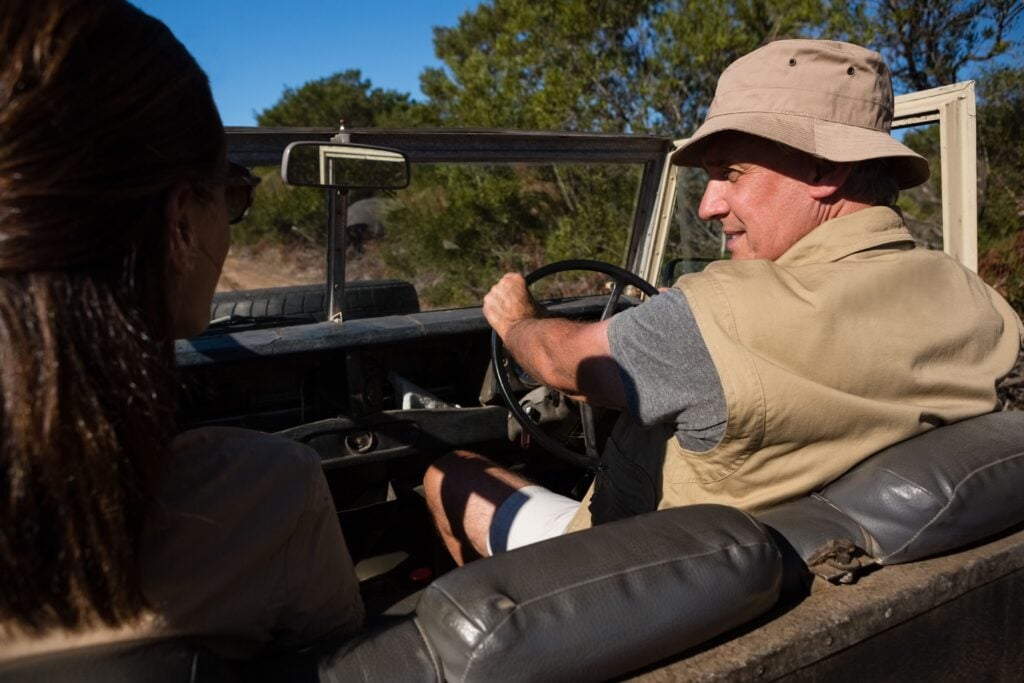
A safari guide’s day in Kruger National Park begins before sunrise with vehicle checks and weather briefings, moves through morning and afternoon game drives, and ends with debriefs and guest engagement. Guides combine ecological knowledge, tracking skills, and hospitality to create meaningful wildlife encounters — all within one of Africa’s most biodiverse conservation areas. No two days are identical.
Before the sun rises: The pre-dawn routine
The alarm sounds well before 5:00 AM. While guests at Kruger Gate Hotel are still asleep in their Deluxe Rooms & Suites, the guides are already moving.
First priority: a vehicle inspection. Fuel levels, tyres, first-aid kits, two-way radios, and binoculars are all checked systematically. A missed item at this stage can compromise the entire day.
Next comes a weather and conditions briefing. Guides review overnight ranger reports, track activity logs from neighbouring zones, and check for any park authority alerts. Kruger’s ecosystem responds differently to temperature, rainfall, and season — and a skilled guide reads those signals before the vehicle leaves the gate.
Morning: The prime wildlife window
The first game drive typically departs between 5:30 and 6:00 AM. This is the golden window — animals are active, light is soft, and the park feels entirely different from how it looks at midday.
Guides don’t follow a fixed route. They read the environment continuously: fresh tracks in the dust, alarm calls from birds, the direction a herd of impala is facing. These are the clues that shape every decision.
What guides are watching for at dawn:
Predator movement near waterholes and drainage lines
Elephant herds moving between feeding areas
Hippos returning from overnight grazing
Raptors taking flight from their roosts
Dung beetle activity (a surprising indicator of larger herbivore presence nearby)
It is important to note that animal sightings in Kruger are never guaranteed. The bush operates on its own terms. Part of what makes a skilled guide exceptional is managing guest expectations honestly while still delivering a rich, educational experience — even when the Big 5 remain elusive on a given morning.
The Guide as Educator and Host
A game drive is only partly about spotting wildlife. The other half is interpretation.
Guides at the level required for Kruger operations hold qualifications from bodies such as the Field Guides Association of Southern Africa (FGASA), which sets tiered competency standards across ecology, tracking, and guest safety (Source: FGASA, 2024). Senior guides often hold a FGASA Level 2 or Professional Field Guide rating — years of study and practical assessment in the field.
During a drive, a guide might explain why a marula tree is significant to both elephant feeding behaviour and local cultural heritage. Or why a specific termite mound indicates a particular soil type. These layers of knowledge transform a game drive from passive observation into active learning.
Guests at Kruger Gate Hotel are often high-end travellers and families who have researched their trips extensively. They ask detailed questions. A guide who can answer with authority — and genuine enthusiasm — elevates the entire stay.
Midday: Rest, reporting, and preparation
By mid-morning, the heat intensifies and wildlife retreats to shade. The vehicle returns to the lodge. This is when the less visible work begins.
How a guide spends the midday hours
Debrief with guests — A brief conversation about the morning’s sightings, answering follow-up questions, and building rapport for the afternoon session.
Complete sighting logs — Guides record every significant sighting: species, location coordinates, behaviour observed, and group size. These logs feed into broader conservation monitoring.
Vehicle maintenance — A second check of the vehicle, cleaning lenses on spotting scopes, and restocking refreshments.
Coordinate with the lodge team — Guides liaise with the hospitality team to align on guest preferences, dietary requirements for sundowner setups, and any special requests for the afternoon.
Personal rest — An experienced guide knows that fatigue compromises judgement. Rest is not optional — it is professional discipline.
Study and continuous learning — Many guides use midday hours to review field guides, update their knowledge on recent ecological research, or mentor junior guides in training.
This rhythm — active in the field, disciplined in administration — is what separates a good guide from a great one.
Afternoon: A different park entirely
The afternoon drive departs around 3:30–4:00 PM, as temperatures begin to drop and animals emerge again. The light shifts to amber and gold — the kind of light that makes Kruger’s landscapes look like oil paintings.
Behaviour patterns change. Predators that rested through the heat are now alert. Herds move toward water. The guide’s tracking instincts sharpen again.
Conservation: The invisible thread
Every guide working in and around Kruger National Park operates within a conservation framework. South Africa’s national parks are managed by SANParks, which oversees anti-poaching operations, ecosystem management, and wildlife population monitoring.
Guides are not passive participants in this system. Their daily sighting logs contribute to population data. Their presence with guests builds the conservation case — people who have experienced the bush firsthand become its most passionate advocates.
At Kruger Gate Hotel, the ethos of conservation runs through every aspect of the guest experience. The hotel’s positioning as the “gateway” to Kruger is not merely geographic — it reflects a commitment to responsible, meaningful tourism that respects the ecosystem rather than exploiting it.
Guests who dine at the Pool bar and Lapa Restaurant will often find that conversations with guides continue over dinner, deepening the connection between the meal, the landscape, and the wildlife seen that day.
Evening: Reflection and reset
By 7:00 PM, the guide’s formal duties are winding down. But the day rarely ends cleanly.
There are guest conversations over dinner, questions about tomorrow’s drive, and informal knowledge-sharing with colleagues. Senior guides often spend time mentoring junior staff — passing on tracking skills, guest management techniques, and the kind of instinctive bush knowledge that cannot be learned from a textbook.
The final task is simple but important: setting the alarm for before 5:00 AM and doing it all again.
What makes an exceptional Kruger Guide
Not every qualified guide becomes exceptional. The difference lies in a combination of technical knowledge, emotional intelligence, and genuine passion for the ecosystem.
The qualities that define elite safari guides:
Deep ecological literacy across flora, fauna, and geology
Calm, confident guest management under pressure
Honest communication — including when wildlife doesn’t cooperate
Continuous self-improvement through study and mentorship
Respect for the park’s rules and conservation priorities
These are the people who shape a guest’s memory of Kruger long after they return home. A single conversation with a skilled guide can reframe how a person thinks about wildlife, conservation, and Africa itself.
Experience Kruger through expert eyes
Kruger National Park covers nearly 2 million hectares and is home to an extraordinary concentration of African wildlife. Understanding it properly requires a guide who has spent years reading its rhythms.
At Kruger Gate Hotel, guests benefit from game drives and wildlife experiences led by qualified professionals who bring exactly that depth of knowledge. Whether you are visiting as a couple, a family, or a corporate group looking for a memorable retreat, the expertise of a skilled guide transforms a safari from a tick-box activity into a life-defining experience.
Frequently Asked Questions
1. What qualifications does a Kruger safari guide need?
Guides operating in and around Kruger National Park typically hold FGASA (Field Guides Association of Southern Africa) certification, with senior guides holding Level 2 or Professional Field Guide ratings. These qualifications cover ecology, tracking, guest safety, and conservation ethics.
2. What time do game drives start in Kruger?
Morning drives typically depart between 5:30 and 6:00 AM to take advantage of peak animal activity at dawn. Afternoon drives depart around 3:30–4:00 PM as temperatures drop and wildlife becomes active again.
3. Are Big 5 sightings guaranteed on a game drive?
No. Animal sightings in Kruger National Park are never guaranteed. Wildlife moves freely across a vast, unfenced ecosystem. Experienced guides maximise opportunities through tracking and knowledge, but the bush always operates on its own terms.
4. Is Kruger National Park worth visiting year-round?
Yes. Kruger offers rewarding wildlife experiences throughout the year. Vegetation density, animal behaviour, and visitor numbers vary across months, but no single season is definitively “best” — each offers a distinct and valuable experience.
5. What role do safari guides play in conservation?
Guides contribute directly to conservation by recording daily sighting logs that feed into population monitoring data. They also build conservation awareness among guests, turning visitors into long-term advocates for wildlife protection.