


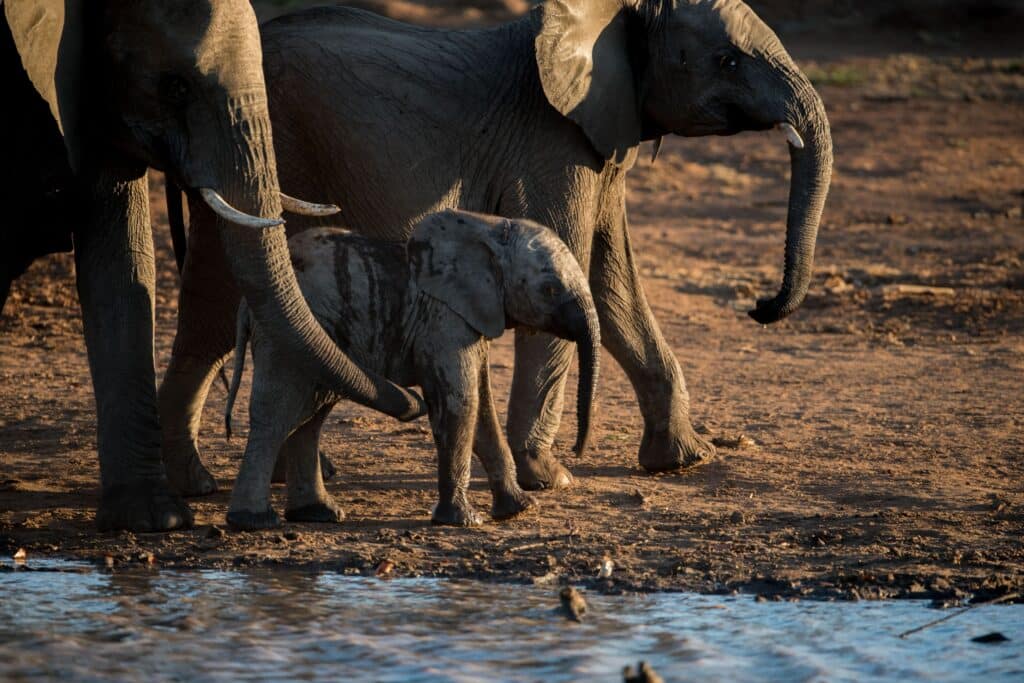
Multi-country tours in Southern Africa typically combine 2–4 destinations including South Africa’s Kruger National Park, Botswana’s Okavango Delta, Zimbabwe’s Victoria Falls, and Zambia’s South Luangwa. These comprehensive African safari holidays span 7–21 days, offering diverse wildlife experiences across multiple ecosystems while staying at luxury accommodations and camps throughout the region.
Waking up in the South African bushveld to a giraffe stretched above thorny branches, then two days later drifting silently through the Okavango Delta in a mokoro canoe while a hippo wallows just metres away seems like a daydream. Standing at the edge of Victoria Falls, soaked in spray, wondering how a single trip could hold this much wonder doesn’t have to be a fantasy.
It’s exactly what multi-country tours across Southern Africa make possible, and it all starts right on the doorstep of Kruger Gate Hotel.
Why one country is never enough
There’s a reason seasoned safari travellers keep coming back to Southern Africa: no single country tells the whole story. Kruger National Park is world-class, full stop. But cross into Botswana and suddenly your game drive is a boat ride through a flooded wilderness teeming with elephants. Cross again into Zimbabwe and the very ground trembles beneath the most powerful waterfall on earth.
Multi-country Africa tours are not about rushing from place to place, they’re about layering experiences that simply can’t exist within a single border. Each destination adds a completely different chapter to your African safari holiday.
Planning your multi-country Africa tours
Choosing your destinations
South Africa: Kruger National Park
The natural anchor for any set of Southern African safaris, Kruger stretches across thousands of square kilometres of riverine forests, open grasslands, and ancient mountain ranges. Its exceptional infrastructure means you can arrive, drop your bags at Kruger Gate Hotel, and be on a game drive within minutes. Big Five sightings here are as reliable as anywhere on the continent, a reassuring start before heading into wilder, more remote territory.
Botswana: Okavango Delta
Few places on earth match the Okavango Delta when the annual flood arrives. Fed by rains falling as far away as Angola’s highlands, the water spills across the Kalahari sand, turning dry plains into a glittering maze of channels, islands, and lagoons. It’s the only place in the world where you can track lions by day from a traditional mokoro canoe and fall asleep in a luxury tented camp to the sound of frogs and reed warblers. Aim for May through September for peak flooding and the best game viewing.
Zimbabwe: Victoria Falls & Hwange National Park
“The Smoke That Thunders” is not an exaggeration. Victoria Falls is so vast, 1.7 kilometres wide, that you can hear it before you see it and feel the spray on your skin from a kilometre away. Pair it with Hwange National Park’s extraordinary elephant herds and you have a Zimbabwe experience that’s hard to top. Adventurous travellers can also explore Mana Pools along the Zambezi River, one of Africa’s finest destinations for walking safaris and canoe trails.
Zambia: South Luangwa
South Luangwa is where the walking safari was born, and it remains the gold standard for intimate wildlife encounters. In the dry months from May to October, the Luangwa River shrinks and concentrations of hippos, crocodiles, leopards, and wild dogs press together along its banks in a spectacle unlike anywhere else in Africa. If you want to feel genuinely close to the wild (not separated from it by a vehicle window) this is where you come.
How long should you go for?
The honest answer: as long as you can. But here’s a practical guide:
Tour length | Recommended countries | What you’ll experience |
7–10 days | South Africa + 1 other | Kruger + Victoria Falls or the Okavango Delta |
11–14 days | South Africa + 2 others | Kruger + Botswana + Zimbabwe |
15–21 days | 3–4 countries | The full Southern Africa circuit |
A minimum of three to four days per destination lets you settle in, find your rhythm, and actually absorb what you’re seeing, rather than spending every morning repacking.
Getting between countries
Road transfers
Border crossings between South Africa, Botswana, and Zimbabwe are well-managed for organised tour groups. Your professional guide handles all documentation while you watch the landscape shift from one country’s personality to the next, a surprisingly enjoyable part of the journey.
Charter flights
Light aircraft transfers are the only option for remote camps in the Okavango Delta or Zambia’s Luangwa Valley, and honestly, a highlight in themselves. Flying low over the delta at sunrise, spotting elephant herds and buffalo from above, is a safari experience on its own. Flight times between Southern African destinations rarely exceed two hours, so you gain far more time in the bush than you spend in the air.
The best African safari countries for a multi-tour journey
South Africa: Your foundation
Kruger National Park is the ideal starting point for multi-country Africa tours because it eases you in gently. Roads are good, lodges are excellent, wildlife is abundant, and the logistics are smooth. Staying at Kruger Gate Hotel means you’re inside the park’s orbit from the moment you arrive, early morning drives begin before the gates open to day visitors, giving you the roads to yourself.
Botswana: Water changes everything
The Okavango Delta fundamentally changes how you relate to the African bush. Water-based safaris, whether by motorboat, mokoro, or on foot through shallow channels, create unexpected intimacy with the landscape. Chief’s Island and Moremi Game Reserve, accessible only by light aircraft, offer some of the most exclusive camps on the continent.
Chobe National Park, sitting at the junction of Botswana, Zimbabwe, and Zambia, is a natural crossroads for multi-country tours. The Chobe River attracts one of the largest concentrations of elephants in Africa, and a sunset boat cruise here is one of those experiences you’ll find yourself describing at dinner parties for years.
For more safari insights, discover how the Kruger National Park and Chobe National Park compare.
Zimbabwe: Drama at every turn
Victoria Falls delivers the kind of spectacle that resets your sense of scale. In the dry season (July to October), the lower water levels reveal dramatic rock formations and open up once-in-a-lifetime activities like Devil’s Pool, a natural rock pool that sits at the very lip of the falls on the Zimbabwe side.
Hwange National Park complements the falls with predator sightings, vast elephant herds, and exceptional birdlife, making Zimbabwe one of the most rewarding stops on any African safari holiday.
Zambia: The Wild at Its Most Intimate
Zambia rewards travellers who want to step beyond the familiar. South Luangwa’s walking safari tradition is carefully maintained by expert guides who read the bush in ways no vehicle ever could. There are no fences, no crowds, no predetermined routes, just you, your guide, and the wild.
The practicalities: What you need to know
Passports and visas
Make sure your passport has at least six months’ validity beyond your travel dates. The good news: Southern Africa is well set up for tourism.
- South Africa: Visa-free entry for most nationalities (90 days)
- Botswana: Visa-free for most visitors (90 days)
- Zimbabwe & Zambia: The KAZA UniVisa covers both countries for multiple entries: one visa, two extraordinary destinations
Health preparations
All safari destinations in Southern Africa fall within malaria zones, although the Kruger National Park is considered a low-risk malaria area. Visit a travel medicine specialist at least four to six weeks before departure for appropriate prophylaxis recommendations. Yellow fever vaccination certificates may also be required when crossing certain borders, your specialist can advise based on your specific itinerary.
Currency: A practical overview
Country | Currency | USD accepted | Credit cards |
South Africa | South African Rand | Limited | Widely accepted |
Botswana | Botswana Pula | Most lodges | Limited outside cities |
Zimbabwe | USD/ZWL | Preferred | Limited acceptance |
Zambia | Zambian Kwacha | Most lodges | Limited outside cities |
Lodges on multi-country tours typically include most meals and activities in their rates, so day-to-day cash needs are lower than you might expect.
When to go: Reading the seasons
Dry season (May–October) — The classic safari window
This is prime time for multi-country Africa tours. Vegetation thins out, animals crowd around shrinking water sources, and the skies are reliably clear and blue. It’s also a pleasant time to travel: warm days, cool nights, and almost no rain.
A practical bonus: Devil’s Pool at Victoria Falls is only accessible during the dry season, when reduced water flow makes it safe to approach the edge.
Green season (November–April) — For the curious traveller
The green season gets unfairly overlooked. Migratory birds flood into Southern Africa in spectacular numbers, the landscapes turn vivid shades of green and gold, and dramatic afternoon thunderstorms create extraordinary photographic conditions. Many lodges offer meaningfully reduced rates during this period, making luxury multi-country tours more accessible than you might think.
Southern Africa’s greater wildlife corridor
One of the things that makes multi-country tours across this region feel cohesive rather than disjointed is the fact that these countries share something remarkable: a single, unbroken wilderness. The Kavango-Zambezi Transfrontier Conservation Area (KAZA TFCA) spans approximately 520,000 square kilometres across five countries, encompassing 36 national parks, game reserves, and community conservancies. It is the largest terrestrial conservation area on earth.
Animals move freely across these borders. The approximately 220,000 elephants living within KAZA don’t recognise the lines humans have drawn on maps, they follow ancient migration routes between Botswana’s water, Zambia’s valleys, and Zimbabwe’s forests. When you travel across these countries, you are, in a very real sense, following the same routes.
Kruger National Park is fully integrated into this network, connected to Zimbabwe’s Gonarezhou National Park and Mozambique’s Limpopo National Park through the Great Limpopo Transfrontier Park. Starting your southern African safaris here doesn’t just make logistical sense, it connects you to one of conservation’s greatest modern success stories.
Frequently asked questions about multi-country tours in Africa
How long should multi-country tours in Southern Africa last?
Ten to fourteen days is a realistic minimum for exploring three countries meaningfully, roughly three to four days per destination, including travel time. You’ll return home wondering how you ever thought two weeks was enough if you can stretch to three weeks.
What is the best time for an African safari holiday across multiple countries?
May through October consistently delivers optimal conditions across Southern Africa. Dry weather improves wildlife sightings in every country, temperatures are comfortable, and logistics run smoothly.
Do I need separate visas for each country on multi-country Africa tours?
Mostly, yes. But the KAZA UniVisa makes Zimbabwe and Zambia easy to combine with a single document. South Africa and Botswana typically offer visa-free entry for most nationalities.
How do charter flights work for southern African safaris?
Light aircraft are the standard way to reach remote camps in Botswana and Zambia. Operators handle customs at designated bush airstrips, and flights between any two Southern African destinations rarely take longer than two hours.
Can families with children join multi-country Africa tours?
Many lodges welcome children aged six to eight and older, though age policies vary by property and country. A private vehicle safari gives families far more flexibility than group tours, and children who experience this tend to become lifelong conservationists.
What wildlife differences can I expect between countries?
Each destination has its own character. South Africa offers exceptional Big Five accessibility from well-maintained infrastructure. Botswana specialises in water-based wildlife encounters. Zimbabwe’s elephant concentrations are among the largest anywhere. Zambia offers the most intimate, walk-in-the-wild experiences on the continent.
Ready to begin?
The hardest part of planning multi-country Africa tours isn’t choosing where to go, it’s accepting that you can’t see everything in a single trip. The good news is that Southern Africa has a way of pulling people back. Travellers who come once for Kruger rarely stop there.
Begin planning your multi-country African safari holiday from Kruger Gate Hotel, the perfect launchpad for southern African safaris that cross borders, span ecosystems, and stay with you for life. Get in touch with Kruger Gate Hotel right away.