


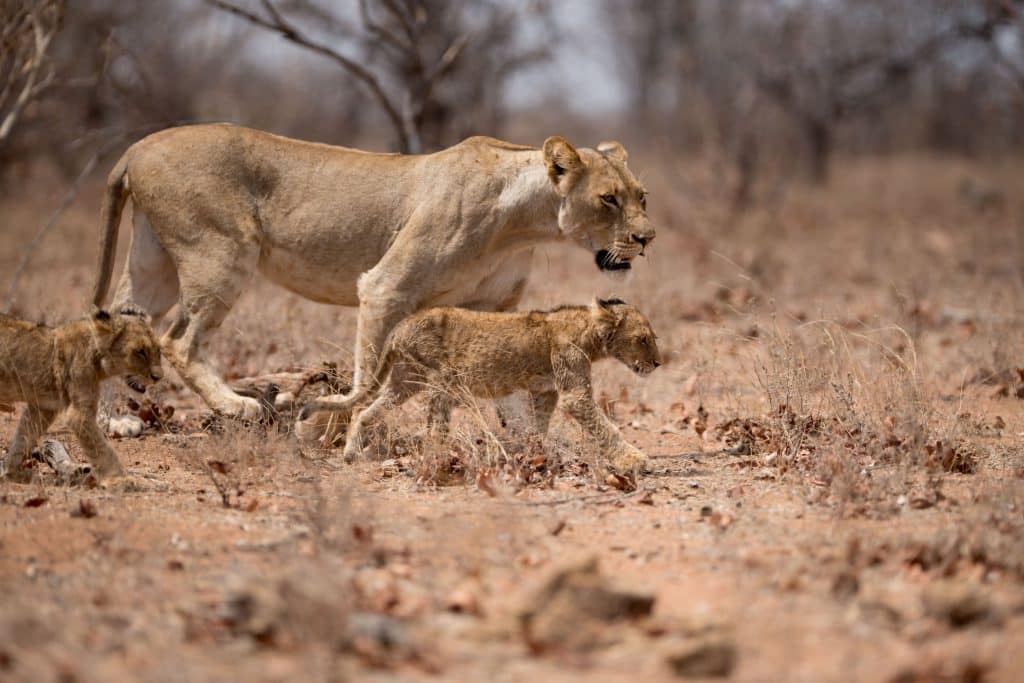
Did you know that a lion’s behaviour shifts dramatically between sunrise and midday? Or that a single alarm call from an impala can set an entire landscape on edge? In the wild, nothing happens by accident. Every tail flick, ear movement, warning snort, or sudden silence carries meaning. These are not random moments but signals shaped by survival, social bonds, and instinct.
This is the science of safari: the fascinating connection between animal behaviour, environment, and timing that ultimately shapes your game drive experience. It’s not just about what you see, it’s about understanding why you’re seeing it.
Once you begin recognising these patterns, a safari transforms from simple wildlife viewing into something deeply immersive. You start anticipating movement. You notice tension building before a hunt. You recognise protective formations in a buffalo herd. And that’s when ordinary sightings turn into the best safari moments.
In this guide, we’ll explore how animal behaviour influences what to expect on a game drive, unpack compelling safari facts, and explain why staying at Kruger Gate Hotel places you in the perfect position to experience the science of safari at its finest.
The science of safari: How behaviour shapes every game drive
A safari goes far beyond spotting animals. It’s about observing behaviour in context, understanding that every interaction reflects strategy, communication, and adaptation.
For example:
- A lion flicking its tail rapidly may be signalling irritation or heightened focus before a hunt.
- Elephants spread their ears wide not only to cool down, but also to appear larger when feeling threatened.
- Buffalo form defensive circles around their calves when predators are nearby.
These are powerful safari facts that change how you interpret what unfolds before you.
Animal behaviour generally falls into four broad categories: instinctive, learned, social, and adaptive. On a game drive, you’ll witness all four, from instinctive predator stalking to complex social bonding in elephant herds. Understanding this framework is central to the science of safari, because it reveals that wildlife encounters are structured, strategic, and deeply interconnected. You may be interested in learning more about this by reading the top 5 most popular wildlife sightings in Kruger National Park.
Movement, feeding & hunting patterns
One of the most important aspects of what to expect on a game drive is timing.
Predators like lions and cheetahs are crepuscular, meaning they are most active at dawn and dusk. During these cooler hours, energy expenditure is lower and hunting success rates increase. By midday, many predators retreat to shade to conserve strength.
Herbivores follow their own rhythms. Antelope graze during cooler periods, remaining alert for danger. Birds frequently act as early warning systems, their sudden flight or alarm calls can reveal a predator long before it becomes visible.
This is where expert guiding makes all the difference. Understanding environmental cues, water availability, seasonal migration routes, and prey movement dramatically increases the chances of witnessing authentic wildlife interaction.
These behavioural rhythms are not coincidence, they are predictable ecological patterns rooted in survival. And recognising them is what elevates a drive from scenic to spectacular.
Social dynamics: The hidden stories of the wild
Some of the most compelling safari moments have nothing to do with hunting at all. They unfold quietly within social groups.
Kruger Park elephants, for instance, are deeply social animals. Matriarch-led herds rely on memory and experience to locate water and avoid danger. Young calves are constantly protected within the group, and you may even witness cooperative caregiving between females.
African lions in the Kruger live within structured prides where hierarchy determines feeding order and territory defence. Subtle body language (posture, proximity, eye contact) reveals power dynamics long before aggression appears.
Game theory, often used in behavioural science, helps explain why animals sometimes choose to fight and sometimes retreat. Every decision balances risk, reward, and survival probability. You’re witnessing strategic calculation in real time when you observe a predator hesitating before attacking, or two males sizing each other up before a territorial dispute.
This is the deeper layer of the science of safari, the invisible decision-making processes shaping what you see. Learn more about predator behaviour by visiting what makes lion vs tiger hunting skills unique on safari?
The influence of human behaviour on safari
A safari is not a one-sided experience. Human behaviour also influences wildlife response. Animals quickly learn to interpret vehicles as neutral when guides maintain consistent speed, respectful distances, and calm behaviour. Sudden movements or loud noise, however, can disrupt natural patterns.
Maintaining appropriate distances ensures animals continue their routines undisturbed. Ethical safari practices protect wildlife wellbeing while preserving authentic behaviour for observation.
Professional guides are trained to read both animal and human cues. They know when to reposition a vehicle, when to remain still, and when to withdraw. Their expertise transforms a drive into an educational journey rooted in the science of safari.
Why Kruger Gate Hotel is the perfect safari platform
Location and timing are everything in wildlife viewing, and Kruger Gate Hotel accommodation offers a distinct advantage.
Located 500m from the Paul Kruger Gate of the Kruger National Park, the hotel provides rapid access to prime wildlife areas during peak behavioural windows. Early entry means you are already in the park as predators return from hunts or prepare for early-morning movement. Sunset proximity allows you to witness the shift from daytime grazing to nocturnal strategy. Less transit time means more observation time, and that significantly increases your exposure to authentic behavioural interactions.
Returning to the comfort of a tranquil hotel that blends seamlessly with the bushveld allows you to reflect on the day’s encounters while remaining immersed in the environment. This positioning creates the ideal balance between comfort and conservation-led adventure for travellers wanting to learn all about safaris while maximising wildlife opportunities.
In short, it places you exactly where the science of safari unfolds most vividly.
Conclusion
The science of safari reveals that every action in the wild (from a lion’s calculated stalk to an elephant’s protective formation) is shaped by survival instinct, social structure, and environmental awareness.
Your game drive becomes more than a tour when you understand these behavioural rhythms, it becomes interpretation. You don’t just see wildlife; you read it. You anticipate it. You appreciate its complexity. That shift in awareness is what turns sightings into stories and drives into lifelong memories.
You unlock the deeper narrative of the wild by choosing the right location, travelling with experienced guides, and observing with intention, one defined by their animals in all their majesty. And that is the true power of the science of safari. Don’t hesitate to book your stay at Kruger Gate Hotel today to embark on your immersive safari.
FAQ’s about animal behaviour
What can we learn from animal behaviour on safari?
We learn how species survive, communicate, protect their young, establish territory, and respond to environmental change. Observing behaviour reveals migration routes, predator-prey dynamics, and complex social systems that shape the ecosystem.
Why are sunrise and sunset drives often the best?
Many predators are most active during cooler dawn and dusk periods. These times increase the likelihood of witnessing hunting preparation, territorial movement, and heightened alertness among prey species.
What are the four main types of animal behaviour?
- Instinctive behaviour – Inborn actions such as migration or stalking prey.
- Learned behaviour – Skills developed through experience.
- Social behaviour – Group interactions and communication.
- Adaptive behaviour – Adjustments that improve survival in changing environments.
Why is understanding animal behaviour important?
It enhances conservation efforts, promotes ethical tourism, and deepens appreciation for ecological balance. For safari travellers, it transforms a visual experience into an intellectual and emotional one.