


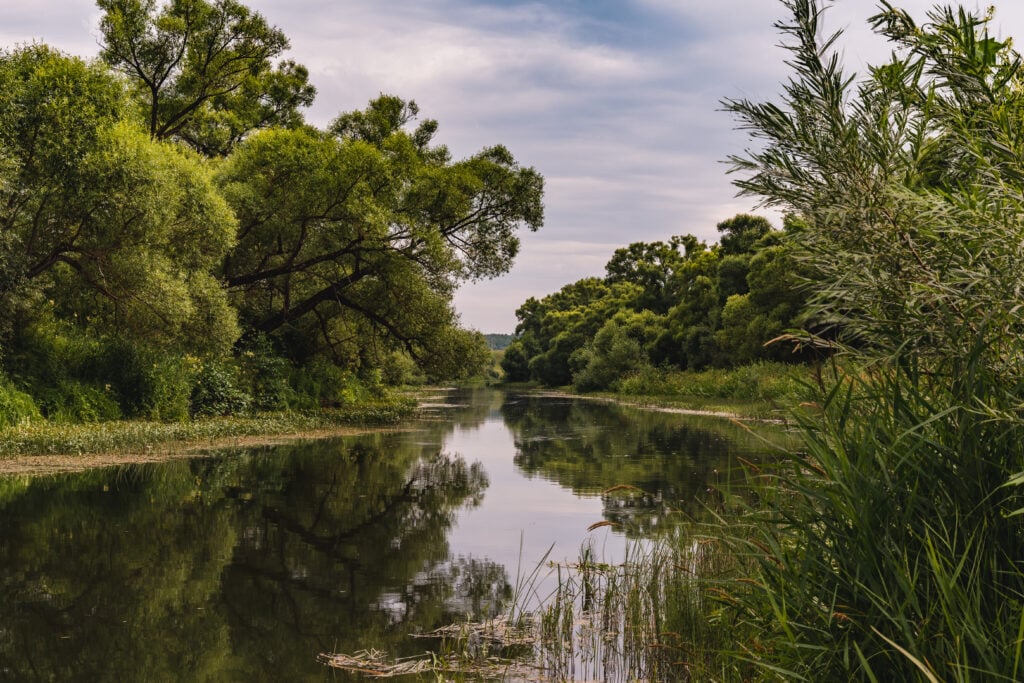
The Sabie River is one of Kruger National Park’s most ecologically significant waterways, flowing through the southern section and sustaining dense concentrations of elephants, hippos, crocodiles, leopards, and hundreds of bird species. Its permanent water supply makes the surrounding riverine habitat productive in every season, offering guests at Kruger Gate Hotel a front-row position to observe Africa’s wildlife in its most natural rhythms.
Why the Sabie River matters in Kruger National Park
Few natural features define the southern Kruger landscape as completely as the Sabie River. Rising in the Mpumalanga Drakensberg escarpment and flowing eastward through the park toward Mozambique, the Sabie is one of the few perennial rivers in the region — meaning it carries water throughout the year, regardless of seasonal rainfall patterns.
That permanence is everything in a semi-arid ecosystem. Where water flows reliably, life concentrates. Vegetation thickens into dense riverine forest. Prey species gather. And where prey gathers, predators follow.
For guests staying at Kruger Gate Hotel — positioned directly at the Paul Kruger Gate entrance to the park — the Sabie River corridor is effectively on the doorstep. Understanding what this river does ecologically helps you appreciate why this location produces some of the most consistent wildlife viewing in southern Africa.
The ecology of a Perennial River in a semi-arid park
Kruger National Park covers approximately 19,485 km² of bushveld. Within that vast landscape, water is the primary organising force for animal movement and distribution.
Most of Kruger’s rivers are seasonal — they run strongly after the summer rains and reduce to isolated pools or dry sand channels in the dry months. The Sabie is different. Its catchment in the Drakensberg highlands receives enough rainfall to sustain flow year-round, making it one of the most biologically productive corridors in the park.
The riverine forest that lines its banks — dense stands of sycamore fig, jackalberry, nyala berry, and fever trees — creates habitat that simply does not exist away from permanent water. This forest canopy supports leopards, which use the dense cover for ambush and to cache kills in the branches above. It shelters nyala antelope, bushbuck, and vervet monkeys. And it provides nesting sites for an extraordinary diversity of birds.
Wildlife concentrated along the Sabie River
The Sabie River corridor is consistently associated with high densities of the species most sought by safari travellers. Here is how the key groups use this waterway:
Elephants
Elephant herds move to the Sabie River daily to drink and socialise. These are large, multigenerational family groups — often 20 to 40 individuals — and watching them interact at the water’s edge is one of the defining experiences of any Kruger visit. Kruger’s elephant population stands at approximately 19,000 individuals, and the Sabie corridor supports a significant share of the southern population.
Hippos and Crocodiles
The Sabie’s deeper pools and slower stretches are permanent home to hippos and Nile crocodiles. Both species are year-round residents. Hippo pods are territorial and highly visible, spending daylight hours in the water and emerging at dusk to graze. Crocodiles bask on sandy banks throughout the day, and their presence is a reminder of how complete this ecosystem remains.
Leopards
The southern Kruger region, and the Sabie River corridor in particular, holds one of the highest leopard densities in Africa. The riverine forest provides ideal cover, and leopards are regularly observed in the trees and on rocky outcrops along the banks. Sightings are never guaranteed — leopards are solitary and cryptic by nature — but the habitat here genuinely improves the probability of an encounter.
Buffalo and Lion
Large buffalo herds use the Sabie River as a primary water source, and where buffalo move, lions follow. The southern section of Kruger has several well-established lion prides whose territories overlap with the river corridor. Predator-prey interactions in this landscape are not staged or managed — they unfold according to the rhythms of the wild.
Birdlife
The Sabie River supports over 200 recorded bird species in its immediate vicinity. Highlights include the African fish eagle — whose call is the defining sound of the African waterway — along with giant kingfisher, Goliath heron, saddle-billed stork, and the rare Pel’s fishing owl, which roosts in the dense riverine canopy.
Kruger as a year-round destination
A common misconception among first-time visitors is that Kruger has a single “best” season. The Sabie River helps explain why that framing is too simple.
|
Season |
Conditions |
Wildlife Viewing Character |
|
Dry season (May–Oct) |
Low vegetation, cooler temps |
Animals concentrate at water; excellent visibility |
|
Wet season (Nov–Apr) |
Lush green bush, warmer |
Newborn animals, migratory birds, dramatic skies |
|
Winter months (Jun–Aug) |
Cool mornings, clear days |
Dense game at river; comfortable daytime temperatures |
|
Summer months (Dec–Feb) |
Hot, afternoon thunderstorms |
Birding peak; predators active in cooler mornings |
Each season offers a genuinely different experience. The Sabie River’s permanence means wildlife is present and active at the water’s edge throughout the calendar year — which is why Kruger Gate Hotel positions itself as a year-round destination rather than a seasonal one.
The dry months concentrate game dramatically along the riverbanks as other water sources diminish. The wet months bring lush, photogenic landscapes, an explosion of birdlife, and the sight of newborn antelope learning to navigate a world full of predators. Neither is superior — they are simply different expressions of the same living ecosystem.
How to make the most of the Sabie River Corridor
Whether you are visiting for the first time or returning to deepen a long relationship with Kruger, a few practical approaches will help you engage meaningfully with the Sabie River environment.
Step-by-step guide to river-focused wildlife viewing from Kruger Gate Hotel:
- Plan your self-drive timing. The Paul Kruger Gate opens at sunrise and closes at sunset. The first and last two hours of daylight are when predators and large mammals are most active near water sources.
- Focus on the river roads. The H1-2 tar road running parallel to the Sabie and the S1 gravel road along the southern bank are among the most productive wildlife-viewing routes in the park. Slow down at every bridge and water crossing.
- Stop and observe at river viewpoints. Patience at a single location — even 20 to 30 minutes — often yields more than covering large distances. Crocodiles, hippos, and visiting elephants move on their own schedule.
- Look up as well as across. Leopards rest in fig tree canopies along the Sabie. Train your eyes on horizontal branches above the waterline, not just the ground.
- Return to your base between drives. Kruger Gate Hotel’s Deluxe Rooms & Suites offer a genuine retreat after time in the bush — a place to rest, review photographs, and prepare for the next outing with full energy.
- Complement your wildlife experience with exceptional dining. The Kudyela Restaurant and River Boma at Kruger Gate Hotel provides a curated culinary experience that reflects the heritage and flavours of the African bushveld — a fitting close to a day spent in one of the continent’s great wild places.
Conservation and the river’s future
The Sabie River does not exist in isolation. Its health depends on responsible land management across its entire catchment — from the highland forests of Mpumalanga to the lowveld plains of Kruger. SANParks and partner conservation organisations actively monitor water quality, invasive species, and flow rates to protect this corridor’s ecological integrity.
Guests who choose to stay at a property like Kruger Gate Hotel — committed to responsible tourism adjacent to the park — contribute directly to the economic case for conservation in this region. Responsible travel is not an abstract principle here; it is a practical mechanism that sustains the wild places that make an experience like this possible.
Frequently Asked Questions
- What animals are most commonly seen along the Sabie River in Kruger?
Elephants, hippos, Nile crocodiles, leopards, buffalo, and lion are regularly associated with the Sabie River corridor. The area also supports exceptionally diverse birdlife, including African fish eagles and giant kingfishers. Sightings are never guaranteed, as these are wild, free-roaming animals.
- Is the Sabie River accessible for self-drive visitors from the Paul Kruger Gate?
Yes. The Paul Kruger Gate provides direct access to the H1-2 and S1 roads, which run alongside the Sabie River. These are among the most wildlife-productive routes in the southern section of Kruger National Park.
- Is Kruger National Park worth visiting in the wet summer months?
Absolutely. The wet season (November to April) brings lush landscapes, peak birdlife, newborn animals, and dramatic skies. The Sabie River remains active with wildlife year-round, making every season a rewarding time to visit.
- How close is Kruger Gate Hotel to the Sabie River?
Kruger Gate Hotel is situated at the Paul Kruger Gate entrance to Kruger National Park. The Sabie River runs through the southern section of the park, accessible within minutes of entering through the gate.